AI IN CUSTOMER EXPERIENCE
Driving Proactive Customer Journeys Across Omnichannel Experiences
- On
- - By Mukit Shaikh
- | 10 min read
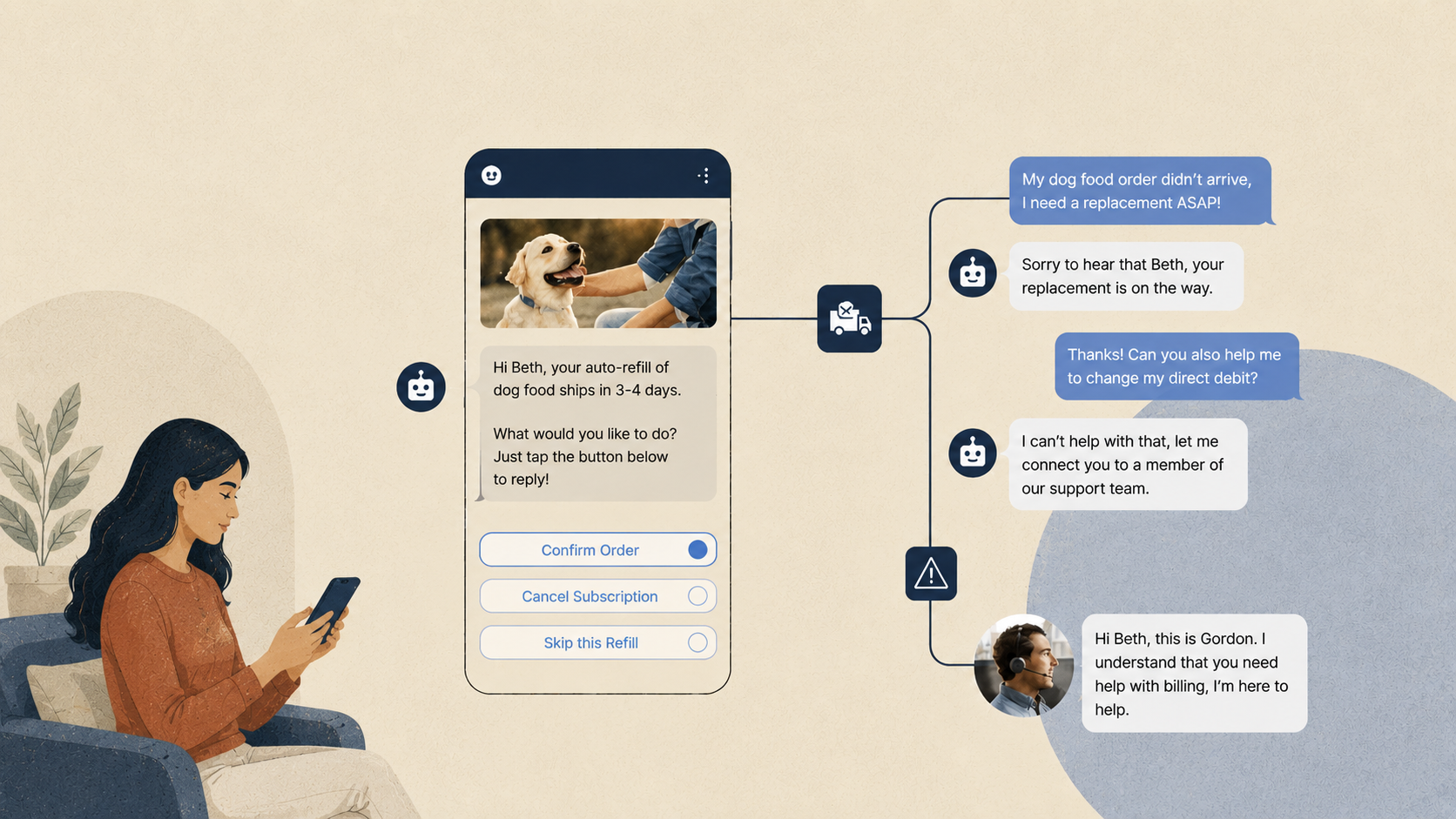
How proactive journeys powered by AI Agents and integrated omnichannel platforms anticipate customer needs, enabling personalized, timely interactions that boost satisfaction and loyalty.
The shift from reactive to proactive CX
For most of the last two decades, customer experience was defined by a single dynamic: the customer had a problem, the customer made contact, the organisation responded. That model, reactive by design, was built for a world of limited channels and patient consumers. Neither condition holds today.
Conversational AI
Chatbots · 50+ languages · digital channels
Voice automation
Intelligent IVR · natural language voice
Workflow Automation
Refunds · Bookings · Zero-Touch Resolution
Proactive outreach
Renewals · predictive triggers · personalised
India’s digital consumers are not waiting. They move fluidly across WhatsApp, voice, email, app chat, and social, often within a single journey, and their expectations have moved with them. The brands winning their loyalty are not the ones that respond fastest. They are the ones that act before the customer has to ask.
The organisations that have absorbed this signal are no longer running contact centres. They are orchestrating customer journeys continuous, anticipatory, channel-agnostic experiences that meet customers where they are, before friction becomes failure.
What proactive CX actually requires
Proactive customer journeys are architecturally demanding. They depend on three capabilities operating in concert, and most enterprises are missing at least one.
The first is unified journey data. A proactive system cannot anticipate a customer’s need without a complete, real-time picture of that customer’s history across every channel. Fragmented data, locked in separate CRM, billing, and engagement systems, produces fragmented intelligence. The signal that should trigger a proactive outreach never fires because no single system can see the full picture.
The second is intelligent automation. Detecting a potential service failure is not enough; the system must be capable of acting on it autonomously generating a personalised message, offering a resolution option, updating a record without requiring a human to advance each step.
The third is seamless channel orchestration. A proactive notification sent on WhatsApp that requires the customer to call a separate number is not a proactive journey. It is a disruption with extra steps. The outreach, the resolution, and any necessary escalation must flow within a connected channel experience, with full context preserved at every transition.

Reactive model
·Customer initiates contact when issue occurs
·Agent asks customer to repeat history
·Resolution measured by handle time
·Channels operate independently
·Data reviewed after the fact
Proactive model
·System detects signal and reaches out before issue escalates
·Full journey context available at every touchpoint
·Resolution measured by issue prevention and first-contact closure
·Channels orchestrated across a unified journey layer
·Data acted on in real time
The omnichannel gap
The word omnichannel has been in circulation long enough to have lost some of its precision. Many organisations believe they are omnichannel because they are present on multiple channels. Presence across channels is multichannel. Omnichannel means unified context, continuous journeys, and consistent intelligence across every channel, simultaneously.
The distinction matters because most CX investments today are undermined not by the quality of individual channel experiences, but by what happens between channels. A customer who resolves 80% of an issue through a WhatsApp AI agent and then calls to complete the final step should not be starting over. A customer who receives a proactive payment reminder via SMS and taps through to a chat session should arrive in a conversation that already knows who they are and why they are there.
Unified, AI-native platforms outperform assembled stacks not because any individual component is superior, but because intelligence flows across the entire journey rather than being confined to isolated modules.
AI Agents as the proactive engagement layer
AI Agents are the operational mechanism through which proactive journeys are delivered at scale. In their most basic form, they handle structured inbound queries autonomously. In their more mature deployment the model that leading CX organisations are building toward they are the system that initiates outreach, manages two-way conversations, integrates with back-office systems to fulfil intent, and escalates to human agents with full context when complexity demands it.
For Indian enterprises, the multilingual dimension of this capability is not a feature, it is a prerequisite. A proactive AI Agent that can engage a customer in Hindi, route to a regional language if needed, and escalate to a human agent with a full conversation summary is a materially different proposition from one that operates in English only.
Proactive outreach
&alerts
Detects signals in usage, billing, or service data and initiates contact before issues escalate.
Two-way conversational resolution
Engages the customer across their preferred channel and resolves intent without human handoff.
Back-office integration
Executes real actions payments, bookings, updates within the same interaction.
Seamless escalation
Transfers to human agents with full context and zero repetition.
Continuous learning
Every interaction feeds back into the system, improving future routing and outreach precision.
The organisations that deploy AI Agents as proactive engagement tools, rather than purely reactive resolution tools, unlock a compounding advantage: inbound volume falls as issues are resolved before they become contacts, agent capacity redirects toward complex and high-value interactions, and customer satisfaction rises because the experience feels anticipatory rather than transactional.
Intelligent routing: closing the loop
A proactive journey that requires human resolution is only as good as the routing decision that follows. Traditional routing was designed for a different era. Static IVR paths, team assignments, and skills-based queues cannot dynamically optimise for business outcomes in real time. They do not know which agent is most likely to resolve this specific customer’s issue on first contact.
AI-driven routing addresses this structurally. Rather than matching interactions to agents based on predefined rules, it evaluates real-time signals customer context, agent performance history, sentiment, channel, and strategic business priority to identify the optimal match for every interaction. The routing objective is configurable: optimise for CSAT, reduce average handle time, improve first-contact resolution, drive sales conversion, or track a custom KPI. The system learns continuously, improving its matching accuracy with every resolved interaction.
The routing maturity curve in the industry is moving in one direction: away from rigid rule-based assignment and toward dynamic, outcome-optimised intelligence. Organisations still operating on static routing logic are not just leaving efficiency on the table. They are actively undermining the customer journeys their proactive investments are designed to build.
The industry direction: unified platforms
Across the CCaaS landscape, the competitive separation is no longer between organisations that have AI and those that do not. It is between organisations running AI across a unified platform where proactive journeys, AI agents, intelligent routing, and quality management share a single data layer and those running AI across fragmented point solutions where intelligence stops at the boundary of each tool.
The practical difference is a feedback loop. In a unified platform, a quality management insight informs a routing adjustment the same day. A proactive journey interaction updates the customer’s context profile immediately. An AI agent’s escalation summary arrives in the human agent’s interface before the call connects. Nothing is lost between systems because there are no inter-system gaps to lose it in.
How Cisco is enabling proactive omnichannel CX
This is where architecture becomes strategy. Organisations running point solutions a separate chatbot platform, a standalone IVR, an independent email tool cannot deliver this continuity. The handoff between systems is where context dies, and where customer effort spikes.
As organisations move toward AI-enabled customer engagement, technology providers are increasingly focusing on proactive, data-driven service models that unify customer journeys across channels.
Within this context, Cisco’s Webex CX portfolio combines proactive engagement, AI automation, routing intelligence, and agent assistance within a shared platform architecture. Rather than operating as isolated point solutions, these capabilities are designed to work from a common data foundation spanning integrations, workflows, journey signals, knowledge systems, actions, and communication channels.
Webex Connect
Proactive outreach layer. Delivers branded, verified messaging and two-way communications across WhatsApp, SMS, email, and voice. Triggers are driven by real-time journey signals, not batch schedules. Supports appointment rescheduling, payment reminders, and booking confirmations.
Webex AI Agent
Autonomous and scripted resolution modes across voice and digital channels. Supports 50+ languages in beta. Integrates directly with back-office systems to fulfil customer intent. Escalates to human agents with full conversation context. Multi-agent collaboration via A2A and MCP protocols available from early 2026.
Webex AI Routing (beta)
Uses native deep learning models to rank agents in real time and match each interaction to the agent most likely to deliver the target business outcome whether CSAT, AHT, first-contact resolution, sales conversion, or a custom KPI.
AI Assistant
Real-time transcription, suggested responses, wrap-up summaries, dropped call summaries, automatic CSAT scoring, and agent wellbeing indicators. Available in 50+ languages in beta including transcription and summaries enabling global and multilingual enterprise deployments.
All four layers operate on a shared data foundation. A proactive outreach interaction enriches the AI routing decision. A routing outcome informs quality coaching. An AI agent escalation summary arrives in the human agent’s screen before the call connects. The system improves continuously because every component feeds into the same intelligence layer, not separate ones.
Cisco has also stated that Webex Contact Center services will be hosted locally through a Mumbai-based data centre deployment, supporting local data residency requirements, lower latency, and regulatory considerations relevant to sectors such as BFSI, healthcare, and government organisations operating in India.
Cisco’s AI governance posture adds a further layer of enterprise confidence. All AI decisions within the Webex platform are governed by Cisco’s Responsible AI Framework, which applies principles of transparency, fairness, accountability, privacy, security, and reliability. Cisco publishes AI Transparency Notes for every model used in its generally available solutions and features, providing the auditability that enterprise risk and compliance teams require.
Partner Spotlight

Webex by Cisco is a leader in cloud-based hybrid work and customer experience technology. Its advanced AI is deeply embedded across its entire portfolio, most notably in Webex Contact Center a solution purpose-built for the era of Agentic AI.
Webex Contact Center is an AI-powered, cloud-based platform designed to deliver exceptional customer experiences, improve agent productivity, and drive sustainable business growth. Its AI-native architecture unifies conversational AI, real-time agent assistance, and automated quality management into a single, intelligent system.
In the context of proactive, omnichannel customer journeys, Webex by Cisco enables organizations to move beyond reactive service models toward intelligent, anticipatory engagement. By unifying journey data, AI-driven automation, and seamless orchestration across channels, the platform empowers enterprises to deliver timely, context-aware interactions at scale helping drive higher customer satisfaction, operational efficiency, and long-term loyalty in an increasingly experience-driven economy.
Learn more about Webex by Cisco
How proactive journeys powered by AI Agents and integrated omnichannel platforms anticipate customer needs, enabling personalized, timely interactions that boost satisfaction and loyalty.
The shift from reactive to proactive CX
For most of the last two decades, customer experience was defined by a single dynamic: the customer had a problem, the customer made contact, the organisation responded. That model, reactive by design, was built for a world of limited channels and patient consumers. Neither condition holds today.
India’s digital consumers are not waiting. They move fluidly across WhatsApp, voice, email, app chat, and social, often within a single journey, and their expectations have moved with them. The brands winning their loyalty are not the ones that respond fastest. They are the ones that act before the customer has to ask.
The organisations that have absorbed this signal are no longer running contact centres. They are orchestrating customer journeys continuous, anticipatory, channel-agnostic experiences that meet customers where they are, before friction becomes failure.
What proactive CX actually requires
Proactive customer journeys are architecturally demanding. They depend on three capabilities operating in concert, and most enterprises are missing at least one.
The first is unified journey data. A proactive system cannot anticipate a customer’s need without a complete, real-time picture of that customer’s history across every channel. Fragmented data, locked in separate CRM, billing, and engagement systems, produces fragmented intelligence. The signal that should trigger a proactive outreach never fires because no single system can see the full picture.
The second is intelligent automation. Detecting a potential service failure is not enough; the system must be capable of acting on it autonomously generating a personalised message, offering a resolution option, updating a record without requiring a human to advance each step.
The third is seamless channel orchestration. A proactive notification sent on WhatsApp that requires the customer to call a separate number is not a proactive journey. It is a disruption with extra steps. The outreach, the resolution, and any necessary escalation must flow within a connected channel experience, with full context preserved at every transition.

Conversational AI
Chatbots · 50+ languages · digital channels
Voice automation
Intelligent IVR · natural language voice
Workflow Automation
Refunds · Bookings · Zero-Touch Resolution
Proactive outreach
Renewals · predictive triggers · personalised


Reactive model
·Customer initiates contact when issue occurs
·Agent asks customer to repeat history
·Resolution measured by handle time
·Channels operate independently
·Data reviewed after the fact

Proactive model
·System detects signal and reaches out before issue escalates
·Full journey context available at every touchpoint
·Resolution measured by issue prevention and first-contact closure
·Channels orchestrated across a unified journey layer
·Data acted on in real time
The omnichannel gap
The word omnichannel has been in circulation long enough to have lost some of its precision. Many organisations believe they are omnichannel because they are present on multiple channels. Presence across channels is multichannel. Omnichannel means unified context, continuous journeys, and consistent intelligence across every channel, simultaneously.
The distinction matters because most CX investments today are undermined not by the quality of individual channel experiences, but by what happens between channels. A customer who resolves 80% of an issue through a WhatsApp AI agent and then calls to complete the final step should not be starting over. A customer who receives a proactive payment reminder via SMS and taps through to a chat session should arrive in a conversation that already knows who they are and why they are there.
This is where architecture becomes strategy. Organisations running point solutions a separate chatbot platform, a standalone IVR, an independent email tool cannot deliver this continuity. The handoff between systems is where context dies, and where customer effort spikes.
Unified, AI-native platforms outperform assembled stacks not because any individual component is superior, but because intelligence flows across the entire journey rather than being confined to isolated modules.
AI Agents as the proactive engagement layer
AI Agents are the operational mechanism through which proactive journeys are delivered at scale. In their most basic form, they handle structured inbound queries autonomously. In their more mature deployment the model that leading CX organisations are building toward they are the system that initiates outreach, manages two-way conversations, integrates with back-office systems to fulfil intent, and escalates to human agents with full context when complexity demands it.
For Indian enterprises, the multilingual dimension of this capability is not a feature, it is a prerequisite. A proactive AI Agent that can engage a customer in Hindi, route to a regional language if needed, and escalate to a human agent with a full conversation summary is a materially different proposition from one that operates in English only.
Proactive outreach & alerts
Detects signals in usage, billing, or service data and initiates contact before issues escalate.
Two-way conversational resolution
Engages the customer across their preferred channel and resolves intent without human handoff.
Back-office integration
Executes real actions payments, bookings, updates within the same interaction.
Seamless escalation
Transfers to human agents with full context and zero repetition.
Continuous learning
Every interaction feeds back into the system, improving future routing and outreach precision.
Webex by Cisco is a leader in cloud-based hybrid work and customer experience technology. Its advanced AI is deeply embedded across its entire portfolio, most notably in Webex Contact Center a solution purpose-built for the era of Agentic AI.
Webex Contact Center is an AI-powered, cloud-based platform designed to deliver exceptional customer experiences, improve agent productivity, and drive sustainable business growth. Its AI-native architecture unifies conversational AI, real-time agent assistance, and automated quality management into a single, intelligent system.
In the context of proactive, omnichannel customer journeys, Webex by Cisco enables organizations to move beyond reactive service models toward intelligent, anticipatory engagement. By unifying journey data, AI-driven automation, and seamless orchestration across channels, the platform empowers enterprises to deliver timely, context-aware interactions at scale helping drive higher customer satisfaction, operational efficiency, and long-term loyalty in an increasingly experience-driven economy.
Learn more about Webex by Cisco
The organisations that deploy AI Agents as proactive engagement tools, rather than purely reactive resolution tools, unlock a compounding advantage: inbound volume falls as issues are resolved before they become contacts, agent capacity redirects toward complex and high-value interactions, and customer satisfaction rises because the experience feels anticipatory rather than transactional.
Intelligent routing: closing the loop
A proactive journey that requires human resolution is only as good as the routing decision that follows. Traditional routing was designed for a different era. Static IVR paths, team assignments, and skills-based queues cannot dynamically optimise for business outcomes in real time. They do not know which agent is most likely to resolve this specific customer’s issue on first contact.
AI-driven routing addresses this structurally. Rather than matching interactions to agents based on predefined rules, it evaluates real-time signals customer context, agent performance history, sentiment, channel, and strategic business priority to identify the optimal match for every interaction. The routing objective is configurable: optimise for CSAT, reduce average handle time, improve first-contact resolution, drive sales conversion, or track a custom KPI. The system learns continuously, improving its matching accuracy with every resolved interaction.
The routing maturity curve in the industry is moving in one direction: away from rigid rule-based assignment and toward dynamic, outcome-optimised intelligence. Organisations still operating on static routing logic are not just leaving efficiency on the table. They are actively undermining the customer journeys their proactive investments are designed to build.
The industry direction: unified platforms
Across the CCaaS landscape, the competitive separation is no longer between organisations that have AI and those that do not. It is between organisations running AI across a unified platform where proactive journeys, AI agents, intelligent routing, and quality management share a single data layer and those running AI across fragmented point solutions where intelligence stops at the boundary of each tool.
The practical difference is a feedback loop. In a unified platform, a quality management insight informs a routing adjustment the same day. A proactive journey interaction updates the customer’s context profile immediately. An AI agent’s escalation summary arrives in the human agent’s interface before the call connects. Nothing is lost between systems because there are no inter-system gaps to lose it in.
Assembled stack
·Proactive journeys, routing, and QM in separate systems
·Context lost at every system boundary
·AI confined to isolated modules
·Insights delayed between systems
·High integration cost and ongoing overhead
Unified AI-native platform
·Single platform across the entire CX lifecycle
·Context flows continuously across all touchpoints
·Intelligence embedded end-to-end
·Real-time feedback loops across all capabilities
·Lower total cost of ownership, faster deployment
How Cisco is enabling proactive omnichannel CX
As organisations move toward AI-enabled customer engagement, technology providers are increasingly focusing on proactive, data-driven service models that unify customer journeys across channels.
Within this context, Cisco’s Webex CX portfolio combines proactive engagement, AI automation, routing intelligence, and agent assistance within a shared platform architecture. Rather than operating as isolated point solutions, these capabilities are designed to work from a common data foundation spanning integrations, workflows, journey signals, knowledge systems, actions, and communication channels.
Webex Connect
Proactive outreach layer. Delivers branded, verifie
Within this context, Cisco’s Webex CX portfolio combines proactive engagement, AI automation, routing intelligence, and agent assistance within a shared platform architecture. Rather than operating as isolated point solutions, these capabilities are designed to work from a common data foundation spanning integrations, workflows, journey signals, knowledge systems, actions, and communication channels.
Webex Connect
Proactive outreach layer. Delivers branded, verifie
Webex Connect
Proactive outreach layer. Delivers branded, verified messaging and two-way communications across WhatsApp, SMS, email, and voice. Triggers are driven by real-time journey signals, not batch schedules. Supports appointment rescheduling, payment reminders, and booking confirmations.
Webex AI Agent
Autonomous and scripted resolution modes across voice and digital channels. Supports 50+ languages in beta. Integrates directly with back-office systems to fulfil customer intent. Escalates to human agents with full conversation context. Multi-agent collaboration via A2A and MCP protocols available from early 2026.
Webex AI Routing (beta)
Uses native deep learning models to rank agents in real time and match each interaction to the agent most likely to deliver the target business outcome whether CSAT, AHT, first-contact resolution, sales conversion, or a custom KPI.
AI Assistant
Real-time transcription, suggested responses, wrap-up summaries, dropped call summaries, automatic CSAT scoring, and agent wellbeing indicators. Available in 50+ languages in beta including transcription and summaries enabling global and multilingual enterprise deployments.
All four layers operate on a shared data foundation. A proactive outreach interaction enriches the AI routing decision. A routing outcome informs quality coaching. An AI agent escalation summary arrives in the human agent’s screen before the call connects. The system improves continuously because every component feeds into the same intelligence layer, not separate ones.
Cisco has also stated that Webex Contact Center services will be hosted locally through a Mumbai-based data centre deployment, supporting local data residency requirements, lower latency, and regulatory considerations relevant to sectors such as BFSI, healthcare, and government organisations operating in India.
Cisco’s AI governance posture adds a further layer of enterprise confidence. All AI decisions within the Webex platform are governed by Cisco’s Responsible AI Framework, which applies principles of transparency, fairness, accountability, privacy, security, and reliability. Cisco publishes AI Transparency Notes for every model used in its generally available solutions and features, providing the auditability that enterprise risk and compliance teams require.